> For the complete documentation index, see [llms.txt](https://phaver.gitbook.io/phaver-help-center/llms.txt). Markdown versions of documentation pages are available by appending `.md` to page URLs; this page is available as [Markdown](https://phaver.gitbook.io/phaver-help-center/phaver-onboarding/start-phaving-around/send-your-first-chat-message.md).
# Send your first chat message
You can send your first message easily. Here steps:
* First off all make sure you set up XMTP
* Then you should go to user profile who you want to send message
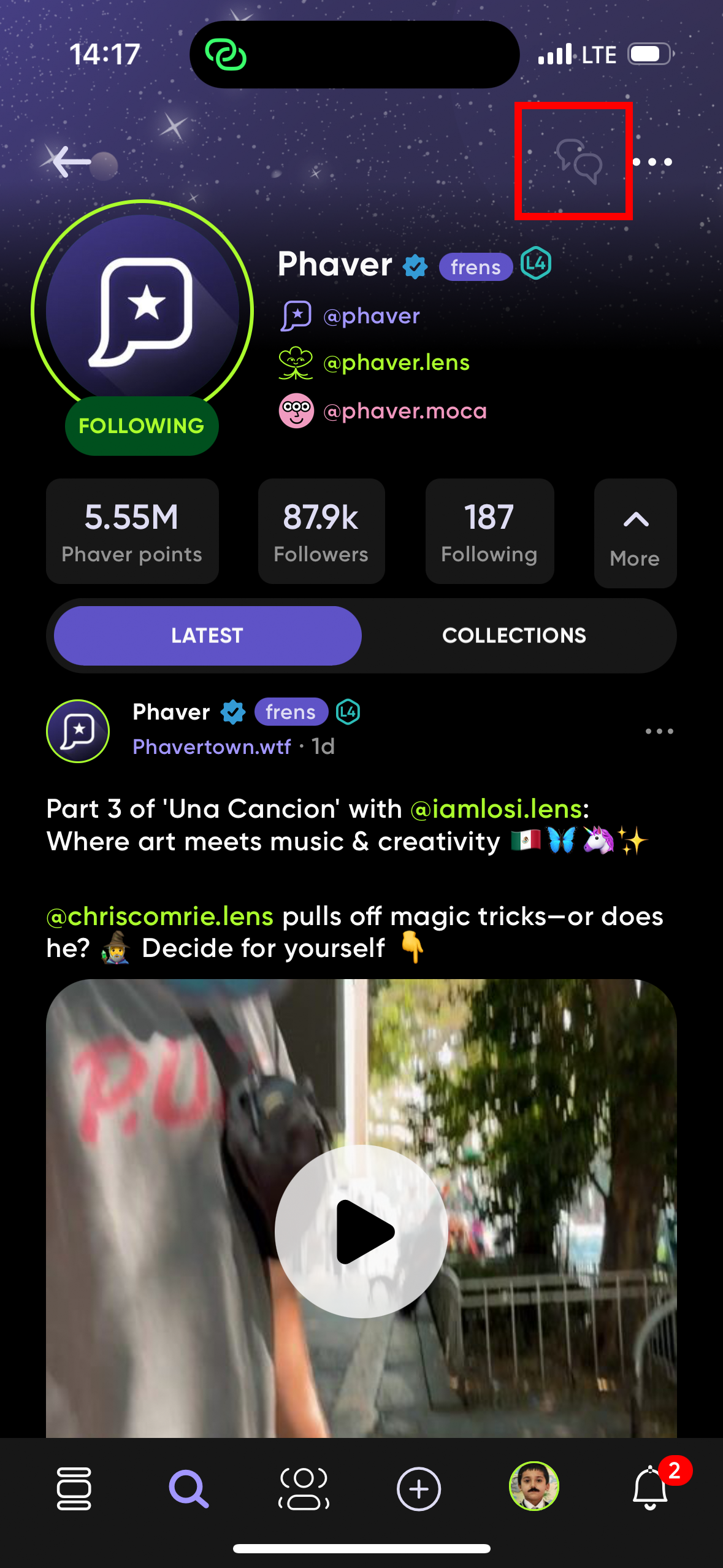
* There will be 2 type of message icon on other users' profile
* First one is non-activated XMTP, when you clicked greyed out message icon on top right, you will see information box. That means that user didn't set up XMTP yet.
* 2nd one is activated CMTP, when you clicked message icon on top right, a chat page will be opened, you can send your message now!