> For the complete documentation index, see [llms.txt](https://phaver.gitbook.io/phaver-help-center/llms.txt). Markdown versions of documentation pages are available by appending `.md` to page URLs; this page is available as [Markdown](https://phaver.gitbook.io/phaver-help-center/phaver/how-to-create-a-phaver-profile.md).
# How to create a Phaver profile
We have purposefully made the signup process as simple as possible. Within 30 seconds - you will have a phaver account up and running
## TL;DR - What is Phaver
* Phaver is a native mobile web3 social application built on Lens Protocol
* We are building a web3 Social app with UX and UI good enough that enables people to onboard into web3 easier than ever before
* Incorporates a native token rewards system, rewarding users in a gamified way for sharing the best content discovered or created
* A home for NFT Social - where users connect their NFT collections to their profile and access NFT-gated topics + privileges
The Phaver mission is to create the most interesting social feed on your mobile phone
## Signing up
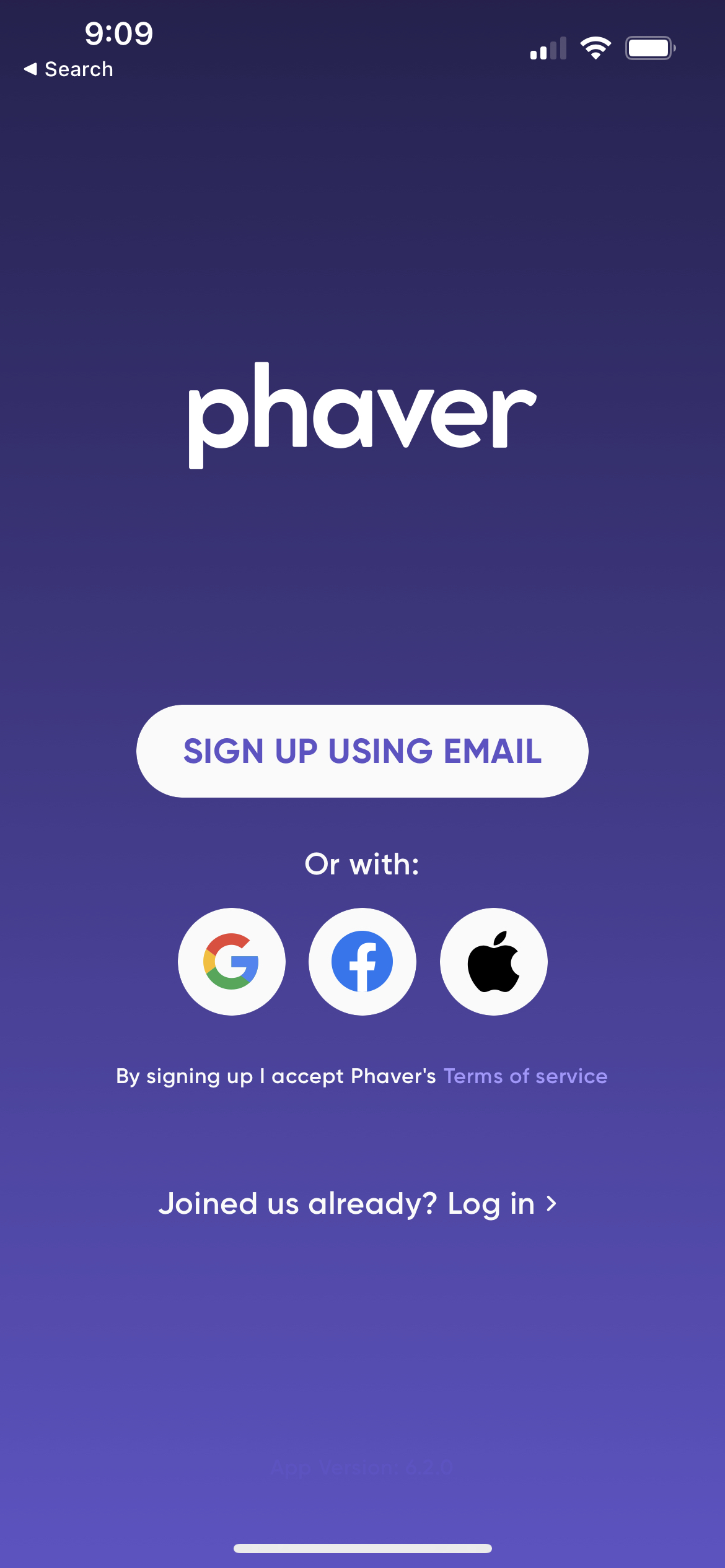
You can sign up to Phaver by either;
1. Using an email address
2. Using your favourite 3rd party app such as Google, Facebook or Apple
 ### Completing the signup process is as easy as 1,2,3
1\. Type in your name

2\. Choose a username (The name that will be displayed on your profile)

3\. Add a profile Picture (Choose your favourite NFT or a maybe a nice pic of yourself?)

### Explainer Video
{% embed url="" %}
### Completing the signup process is as easy as 1,2,3
1\. Type in your name

2\. Choose a username (The name that will be displayed on your profile)

3\. Add a profile Picture (Choose your favourite NFT or a maybe a nice pic of yourself?)

### Explainer Video
{% embed url="" %}